 Home
Home Knowledge
  Tools
Tools  Practice
  Divination
  Profile
 Contact
The Planets
In astrology, the word planet is used in its older symbolic sense of a wandering celestial power. The Sun and Moon are therefore included as the two luminaries, alongside the five planets visible to the unaided eye.
The Sun, Moon, Mercury, Venus, Mars, Jupiter, and Saturn form the seven classical spheres that shaped traditional astrology, alchemy, and planetary magic. Uranus, Neptune, and Pluto entered astrology after their astronomical discovery and belong to a later, modern layer of interpretation. This page distinguishes historical correspondences from contemporary ones rather than presenting them as a single ancient system.
Each profile describes an archetypal function, not a fixed verdict about personality or fate. A planet gains specific meaning through its sign, house, aspects, condition, and the wider context of the natal chart.

The Sun
Identity, vitality, creative will, visibility, and the search for an inner center.

The Moon
Feeling, memory, instinct, rhythm, belonging, and the need for emotional shelter.

Mercury
Perception, language, exchange, learning, mediation, and movement between worlds.

Venus
Attraction, value, pleasure, relationship, beauty, and the art of reconciliation.

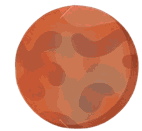
Mars
Desire, courage, separation, defense, conflict, and the power to act decisively.

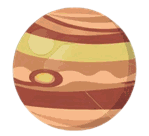
Jupiter
Meaning, faith, growth, judgment, generosity, and the expansion of possibility.

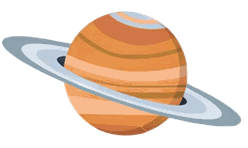
Saturn
Time, boundary, responsibility, consequence, endurance, and earned authority.

Uranus
Awakening, disruption, autonomy, invention, and change at the level of systems.
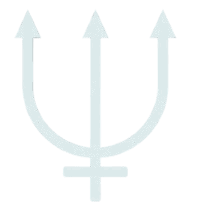
Neptune
Imagination, longing, permeability, compassion, enchantment, and illusion.

Pluto
Power, compulsion, hidden processes, irreversible endings, and regeneration.