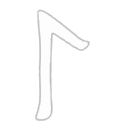
Runes are letters of several related writing systems used by Germanic-speaking communities across northern Europe. They recorded names, ownership, memorials, messages, prayers, charms, and curses. Their history includes sacred and magical uses, but runes were never only magical signs, and the modern idea that every rune is a fixed “energy code” is not an established ancient doctrine.
A responsible esoteric approach begins with that distinction. The rune's sound and historically grounded name come first; the surviving inscriptions and rune poems provide context; modern divination and spiritual practice form a later interpretive layer. Keeping those layers visible does not weaken the mystery. It prevents modern invention from being mistaken for an unbroken Viking-age system.
A Historical Map of Runic Writing
Older or Elder Futhark is the earliest widely attested rune-row. Its 24 characters were used from the first centuries CE until roughly the seventh or early eighth century across a broad Germanic-speaking region. Most surviving inscriptions are short: personal names, makers' formulas, ownership marks, memorial language, enigmatic sequences, or texts with possible ritual force.
Younger Futhark emerged in Scandinavia around the beginning of the Viking Age. It reduced the rune-row to 16 characters even as the spoken language developed more sounds, so one rune could represent several values. Long-branch and short-twig forms are the two best-known graphic traditions.
Anglo-Frisian Futhorc expanded the row to represent changes in Old English and Old Frisian. Runes also continued in medieval Scandinavia, where dotted and additional forms made spelling more precise. “The runes” therefore do not name one frozen alphabet but a family of changing scripts.
Elder Futhark
The name Futhark comes from the first six sound values: f, u, th, a, r, k. The familiar names Fehu, Uruz, and the rest are scholarly reconstructions based largely on later rune-name traditions; an asterisk, as in *fehu, marks a reconstructed form rather than a word preserved in an Elder Futhark inscription.
The 24 runes are conventionally arranged in three groups of eight, called aettir. Division into groups has historical support in rune-rows and later cipher systems, but the popular titles “Freyr's Aett,” “Hagal's Aett,” and “Tyr's Aett,” together with a complete spiritual storyline for each group, should be treated as later interpretive conventions rather than a securely documented ancient curriculum.
First group: Fehu, Uruz, Thurisaz, Ansuz, Raidho, Kenaz/Kaunan, Gebo, Wunjo.
Second group: Hagalaz, Nauthiz, Isa, Jera, Eihwaz, Perthro, Algiz, Sowilo.
Third group: Tiwaz, Berkano, Ehwaz, Mannaz, Laguz, Ingwaz, Dagaz, Othala.
Select a rune below for its reconstructed name, sound value, historical grounding, uncertainties, and a clearly labelled modern esoteric reading.
Elder Futhark Rune Meanings
Each rune's reconstructed name, sound value, historical grounding and clearly labelled modern esoteric reading. Selecting a rune above opens the same text in a reading pane.
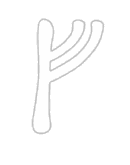
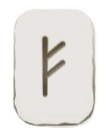
Fehu (F)
System: Elder Futhark
Aett: First group (1 of 3)
Sound: F
Meaning: *fehu - cattle, movable wealth
Historical Grounding
The reconstructed Proto-Germanic name *fehu means cattle and, by extension, movable wealth. The rune represents the /f/ sound. In societies where livestock carried value, wealth was alive, transferable, productive, and vulnerable. Later rune poems do not present wealth as uncomplicated luck: they connect it with comfort and generosity, but also with conflict among kin and the responsibility to share.
Contemporary Esoteric Reading
Fehu is best read as resources in circulation rather than a promise of sudden money. It can refer to income, skill, time, attention, vitality, or anything whose value depends on wise movement. Its difficult expression is hoarding, careless loss, measuring worth only through possession, or allowing resources to control the keeper.
Reflection: What resource is available now? Where must it circulate, and what duty comes with possessing it? Orientation does not create an ancient reversed meaning; context reveals whether Fehu is flowing, withheld, wasted, or responsibly tended.
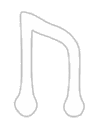
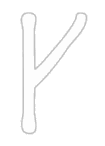
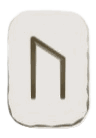
Uruz (U)
System: Elder Futhark
Aett: First group (1 of 3)
Sound: U
Meaning: *uruz - aurochs, wild ox
The Aurochs
*Uruz is reconstructed as “aurochs,” the formidable wild cattle once found across Europe, and the rune represents /u/. This Elder Futhark name should not be confused with the different meanings attached to the Younger Futhark ur in Scandinavian rune poems, where drizzle or slag may appear. The animal image suggests physical reality and untamed capacity, but “strength” is an interpretation of the name, not its literal translation.
Modern Practice
Uruz can symbolize stamina, recovery, embodied presence, and power that has not yet accepted a direction. It does not guarantee health and should never replace medical care. In a difficult position it may indicate force without skill, exhaustion, or an attempt to dominate what should be respected.
Reflection: What capacity is present beneath habit? Does it need release, training, rest, or a worthy task? Uruz asks for relationship with power, not admiration of power for its own sake.
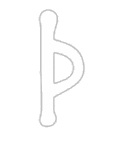
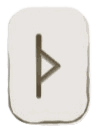
Thurisaz (TH)
System: Elder Futhark
Aett: First group (1 of 3)
Sound: TH
Meaning: *thurisaz - giant or hostile being
Force at the Threshold
The reconstructed name *thurisaz is related to the beings called thursar, often rendered as giants or hostile powers, and the rune represents the “th” sound. Later rune traditions also bring in the image of a thorn. Neither the shape nor the name proves that this is historically “Thor's hammer,” and its popular use as a simple protection rune is a modern simplification.
In mythic terms, the thurs is a force that challenges order. A thorn protects the plant while also wounding the careless hand. Both images make Thurisaz a sign of dangerous contact, necessary resistance, and consequences.
Esoteric Reading
Thurisaz may call for a boundary, a deliberate pause, or the courage to face conflict without becoming identical to it. Its shadow is aggression, provocation, or opening a door before understanding what stands behind it.
Reflection: Where is force required, and where would force multiply the danger? What threshold should not be crossed automatically?
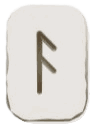
Ansuz (A)
System: Elder Futhark
Aett: First group (1 of 3)
Sound: A
Meaning: *ansuz - a god, one of the Aesir
Divinity and the Spoken Word
*Ansuz is reconstructed as “a god” or a member of the Aesir, and represents /a/ in the Elder Futhark. Its linguistic relationship to divine beings makes sacred authority relevant, while later developments of the rune name differ across Scandinavian traditions. Odin's strong association with poetry, knowledge, and runes makes an Odinic reading understandable, but not every historical a-rune is automatically a message from Odin.
Listening Before Interpretation
Modern rune work associates Ansuz with speech, breath, teaching, inspiration, signs, and the responsibility carried by language. Its difficult aspect includes rumor, manipulation, inflated authority, or hearing only the message one already wanted.
Reflection: What is actually being communicated? Who is speaking, what gives the speaker authority, and what must be verified? Ansuz values inspired language, but it also demands precise listening and ethical use of the word.
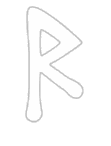
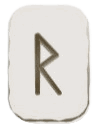
Raidho (R)
System: Elder Futhark
Aett: First group (1 of 3)
Sound: R
Meaning: *raido - riding, journey
Riding as Ordered Movement
The reconstructed name *raido means riding or a journey and the rune represents /r/. The later rune poems treat riding as both pleasurable and demanding: movement looks different to the person seated indoors than to the one traveling a hard road. The historical name concerns travel and riding, not a guarantee that events are moving according to cosmic destiny.
Rhythm, Route, and Responsibility
In contemporary esoteric use, Raidho can signify purposeful movement, timing, sequence, law, ritual order, and coordination between intention and conditions. A journey needs a destination, but also a vehicle, pace, route, and respect for fellow travelers. Its difficult expression is haste, loss of direction, rigid control, or motion used to avoid decision.
Reflection: What is the next real step? Is the route aligned with the purpose, and whose pace must be considered? Raidho asks whether movement has become a coherent path.
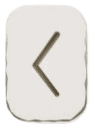
Kenaz (K/C)
System: Elder Futhark
Aett: First group (1 of 3)
Sound: K
Meaning: *kaunan or *kenaz - name disputed: ulcer or torch tradition
An Important Uncertainty
The sixth rune represents /k/, but its reconstructed name is disputed. Scandinavian rune poems preserve kaun, “ulcer” or “sore,” while the Old English Rune Poem has cen, commonly understood as a torch. Modern practice usually prefers the luminous name Kenaz and builds meanings of knowledge and creativity from it. That is a valid interpretive branch, not a settled Elder Futhark fact.
Two Images, One Tension
The torch reveals, teaches craft, and makes focused work possible. The ulcer exposes irritation, vulnerability, and a condition that cannot be ignored. Together they offer a more demanding symbol: illumination may reveal a wound, and skill may grow from sustained attention to what is painful or obscure.
Reflection: What needs light, and what does the new clarity make impossible to ignore? In modern ritual Kenaz can support learning and craft, but it should not be presented as an ancient fire-element formula.
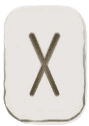
Gebo (G)
System: Elder Futhark
Aett: First group (1 of 3)
Sound: G
Meaning: *gebo - gift
The Gift Creates a Bond
*Gebo means gift and represents /g/. In early Germanic societies, giving was rarely detached from relationship. Gifts could establish loyalty, hospitality, obligation, alliance, honor, and reciprocal care. The Old English Rune Poem connects the gift with generosity and dignity, giving the name a social depth greater than modern “good luck.”
A gift is not the same as a purchase, yet it is not always free of consequence. Gebo therefore concerns the quality of exchange: whether both parties retain dignity, whether consent is real, and whether generosity becomes control.
Modern Esoteric Reading
Gebo can illuminate partnership, reciprocity, vows, offerings, and the capacity to receive. Because its common form is symmetrical, modern systems often say it cannot be reversed; historically, however, there is no inherited reversal doctrine to solve.
Reflection: What is being given, what is expected, and is the exchange worthy of everyone involved?
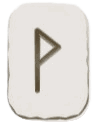
Wunjo (W)
System: Elder Futhark
Aett: First group (1 of 3)
Sound: W
Meaning: *wunjo - joy, delight
Joy in Belonging
The reconstructed name *wunjo means joy or delight and the rune represents /w/. The Old English Rune Poem describes joy in relation to freedom from suffering and the possession of prosperity and community. Its world is not the modern demand to remain positive at all times; joy arises through conditions, relationship, and relief.
A Measure of Harmony
Contemporary readings use Wunjo for belonging, shared success, emotional coherence, hope, and the moment when effort becomes meaningful. Its difficult side includes forced optimism, dependence on approval, pleasure that hides a problem, or a community whose harmony requires someone else's silence.
Reflection: What kind of joy is sustainable? Who shares in it, and what truth must be included for harmony to be real? Wunjo can mark celebration, but it also asks whether the circle is genuinely whole.
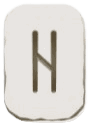
Hagalaz (H)
System: Elder Futhark
Aett: Second group (2 of 3)
Sound: H
Meaning: *hagalaz - hail
The Weather Does Not Negotiate
*Hagalaz means hail and represents /h/. The Scandinavian and Old English rune poems describe hail as cold grain or a shower that later becomes water. The image is concrete: a sudden natural event can damage crops, interrupt travel, and then disappear or change state. Historical evidence does not define the rune as “organized chaos” or promise that every disruption is secretly beneficial.
Reading Disruption Honestly
Modern esoteric use reads Hagalaz as an uncontrollable condition, rupture, exposure, or the collapse of an arrangement that could not withstand the weather. Sometimes disruption clears space; sometimes it simply causes loss. The rune's wisdom lies in adaptation, not romanticizing harm.
Reflection: What is outside personal control? What can be sheltered, what must be released, and what should be assessed only after the storm has passed?
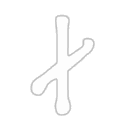
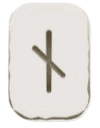
Nauthiz (N)
System: Elder Futhark
Aett: Second group (2 of 3)
Sound: N
Meaning: *naudiz - need, constraint
Necessity and Friction
The reconstructed *naudiz means need, hardship, or constraint and represents /n/. The rune poems present need as oppressive, yet also as something that can become a source of help when recognized in time. That tension is more precise than treating every difficulty as a spiritual lesson chosen for growth.
Need narrows possibilities. It reveals what is essential, where dependence exists, and which desire has become compulsion. Constraint can produce discipline, but deprivation is not automatically ennobling.
Modern Esoteric Reading
Nauthiz can point to limits, delayed gratification, necessity, resistance, and the heat generated when reality opposes desire. Its shadow appears as chronic scarcity thinking, self-denial without purpose, or trying to force an outcome whose conditions are absent.
Reflection: What is genuinely needed, what is merely wanted, and which limit must be worked with rather than denied?
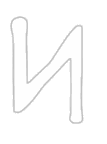
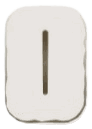
Isa (I)
System: Elder Futhark
Aett: Second group (2 of 3)
Sound: I
Meaning: *isaz - ice
Stillness with a Surface
*Isaz means ice and represents /i/. The rune poems describe ice as cold, slippery, beautiful, and dangerous - even as a temporary bridge. Ice preserves and supports under certain conditions, then changes when warmth returns. It is not simply a negative rune of blockage.
Concentration and Rigidity
In contemporary practice, Isa can indicate pause, containment, self-command, cooling, or the concentration of scattered attention into one line. The same quality can harden into isolation, delay, emotional freezing, or the illusion that a temporary condition will last forever.
Reflection: What should stop for now? Is stillness protecting the work or preventing necessary movement? Because the stave looks the same when turned, some modern systems call Isa non-reversible, but historical interpretation did not depend on this geometry.
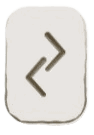
Jera (J/Y)
System: Elder Futhark
Aett: Second group (2 of 3)
Sound: J / Y
Meaning: *jera - year, season, harvest
The Right Result in Its Season
The reconstructed name *jera means year, season, or harvest and represents a /j/ sound similar to English “y.” The name belongs to agricultural time: preparation, sowing, weather, labor, ripening, and reaping. A harvest is consequence, but it is not the imported doctrine of karma, nor a guarantee that effort always receives a fair reward.
Cycles and Maturation
Modern esoteric reading uses Jera for gradual results, recurrence, timing, and the completion of a process that cannot be hurried without damage. Its difficult aspect may be repetition without learning, impatience, mistaking busyness for cultivation, or expecting fruit from what was never planted.
Reflection: What stage is the work actually in? Which result requires more time, and what action belongs to this season rather than the imagined future?
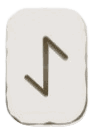
Eihwaz (ï)
System: Elder Futhark
Aett: Second group (2 of 3)
Sound: Vowel conventionally transliterated ï; exact early value debated
Meaning: *ihwaz - yew; sound value and form require care
The Yew and the Problem of Reconstruction
The rune commonly called Eihwaz is reconstructed as *ihwaz or a related form meaning yew. Its exact early sound value remains debated and runologists conventionally transliterate it as ï; the familiar modern label “EI” is not a precise phonetic value. The Old English Rune Poem's yew stanza emphasizes a rough-barked tree, firmly rooted and enduring.
Yew wood was valued and the living tree can be long-lived; its toxicity also complicates any purely comforting symbolism. The popular identification of Eihwaz with Yggdrasill or a universal axis is a modern esoteric development, not a direct statement preserved in an Elder Futhark source.
Modern Reading
Eihwaz can signify endurance through transition, contact between levels, disciplined defense, and a transformation that preserves a living core. Its shadow is endurance turned into refusal or fascination with death detached from life.
Reflection: What must remain rooted while the form changes?
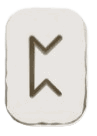
Perthro (P)
System: Elder Futhark
Aett: Second group (2 of 3)
Sound: P
Meaning: *pertho - name and literal meaning uncertain
The Honest Rune of Uncertainty
Perthro represents /p/, but the reconstructed name *pertho and its literal meaning remain disputed. The Old English Rune Poem uses the enigmatic word peorth in a stanza associated with play or pleasure in a hall. Proposals include a gaming piece, game, cup, lot-cup, or another object, but no consensus turns these guesses into fact.
This uncertainty is important. The common meanings “fate,” “womb,” “initiation,” and “hidden feminine mystery” are modern interpretations built around one or more proposed etymologies.
Modern Esoteric Reading
Perthro can serve as a symbol for the unknown factor, chance, disclosure, the concealed structure of a situation, and the limits of interpretation itself. Its difficult expression is gambling on ambiguity or pretending secrecy proves depth.
Reflection: What is not known, and can the question remain open without being filled by fantasy?
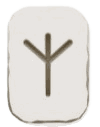
Algiz (Z)
System: Elder Futhark
Aett: Second group (2 of 3)
Sound: Z, later developing toward R in North Germanic
Meaning: *algiz - reconstructed name uncertain; later evidence is complex
Name, Sound, and Symbol Are Not Simple
The fifteenth rune represents a sound conventionally transliterated /z/, which later developed toward an r-like sound in North Germanic. The popular reconstructed name *algiz, often translated “elk,” is not secure. The related Old English rune name eolh-secg refers to a plant, commonly understood as elk-sedge, and its poem emphasizes the pain it inflicts on anyone who grasps it.
The familiar meanings “shield,” “divine protection,” and a person reaching toward heaven are interpretive readings, not direct translations of an agreed ancient name.
Modern Esoteric Reading
Algiz can nevertheless work as a symbol of alertness, defended space, instinct, and contact that requires boundaries. Protection is active discernment, not invulnerability.
Reflection: What deserves protection, and what behavior actually provides it? Context also matters because this and other rune-like forms have acquired modern political uses unrelated to their earliest inscriptions.
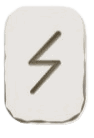
Sowilo (S)
System: Elder Futhark
Aett: Second group (2 of 3)
Sound: S
Meaning: *sowilo - sun
The Sun as Orientation
*Sowilo means sun and represents /s/. The rune poems describe the sun as light, hope, and a guide for travelers, while also placing it within a world of clouds, sea, and inevitable cycles. The historical name gives a strong solar foundation; it does not establish a universal promise of victory or permanent positivity.
Clarity That Must Be Directed
In modern esoteric use, Sowilo can signify vitality, coherent purpose, illumination, honor, and the ability to orient oneself. Too much identification with solar success can become burnout, self-importance, exposure, or the refusal to acknowledge shadow.
Reflection: What gives reliable direction? What can now be seen clearly, and how should that clarity be used? The double-sowilo emblem was appropriated by the SS; the ancient rune is older than that use, but modern combinations and contexts must be read responsibly.
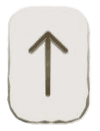
Tiwaz (T)
System: Elder Futhark
Aett: Third group (3 of 3)
Sound: T
Meaning: *tiwaz - the Germanic god Tiw, later Norse Tyr
The Deity in the Rune Name
*Tiwaz is the reconstructed name of the Germanic god known in Old English as Tiw and in Old Norse as Tyr; the rune represents /t/. Later Norse myth remembers Tyr as the one-handed god who pledges his hand as security when the gods bind the wolf Fenrir. Rune poems connect the name with a guiding celestial sign and a god of steadfastness.
Integrity and Cost
Modern readings emphasize justice, courage, oath, leadership, sacrifice, and directed will. The rune does not guarantee legal victory or prove that one side is righteous. Its sharper question concerns whether action and principle remain aligned when alignment has a cost.
Reflection: What commitment deserves sacrifice, and who would bear the price? Is the direction ethical, or merely forceful? Tiwaz asks for disciplined action under a standard higher than personal triumph.
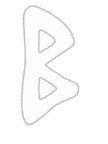
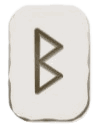
Berkano (B)
System: Elder Futhark
Aett: Third group (3 of 3)
Sound: B
Meaning: *berkanan - birch
Birch and Renewal
The reconstructed name *berkanan means birch and the rune represents /b/. Related rune-poem traditions describe the birch or birch twig. Associations with spring, regeneration, fertility, and shelter grow naturally from the tree image, but a direct ancient assignment of this rune to Freyja or Frigg is not securely attested.
Birch is a living organism, not an abstract promise of easy birth. Growth needs suitable ground, weather, protection, and time; pruning and shedding may be part of renewal.
Modern Esoteric Reading
Berkano can symbolize care, healing environments, beginnings, gestation, family processes, and creative work that must be nurtured before exposure. Its difficult side includes overprotection, smothering care, dependence, or expecting growth without conditions.
Reflection: What is genuinely beginning, and what kind of care will help it become independent?
Ehwaz (E)
System: Elder Futhark
Aett: Third group (3 of 3)
Sound: E
Meaning: *ehwaz - horse
The Horse and Coordinated Movement
*Ehwaz means horse and represents /e/. The name is distinct from Eihwaz, the yew rune, despite their similar modern spellings. Horses transformed travel, labor, status, and warfare. The widely used symbolic image of cooperation between horse and rider is a modern development grounded in the real demands of trust, training, and responsive movement.
Partnership in Motion
In contemporary rune work, Ehwaz can indicate progress through cooperation, transition, transport, loyalty, and the adjustment required when two wills move together. Its difficult expression is mistrust, incompatible pace, dependence, or pushing movement before the partnership is ready.
Reflection: What relationship carries the journey? Are direction, pace, and consent shared? Ehwaz is not merely “travel soon”; it examines the living bond that makes movement possible.
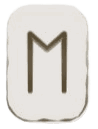
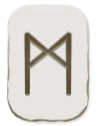
Mannaz (M)
System: Elder Futhark
Aett: Third group (3 of 3)
Sound: M
Meaning: *mannaz - person, human being
The Human Is Relational
*Mannaz means person or human being and represents /m/. The rune poems reflect on human life as social, vulnerable, mortal, and dependent on others. The literal sense is humanity, not exclusively male identity, despite older English translations that use “man” generically.
Self-Knowledge Within Community
Modern esoteric readings connect Mannaz with mind, identity, culture, cooperation, and the mirror provided by other people. It can reveal the difference between the private self-image and the person enacted through relationships. Its difficult side is isolation, conformity, projection, or treating intellect as separation from the living world.
Reflection: What is personal, what is inherited from the group, and what responsibility accompanies belonging? Mannaz asks not only “Who am I?” but “How do my actions participate in the human field?”
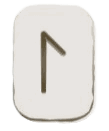
Laguz (L)
System: Elder Futhark
Aett: Third group (3 of 3)
Sound: L
Meaning: *laguz - water, lake
Water Gives Life and Removes Certainty
*Laguz means water or lake and represents /l/. Related rune poems evoke ocean, waterfall, and the danger or vastness of water. The historical image is not only gentle flow: water carries, nourishes, conceals, erodes, overwhelms, and demands skill from the traveler.
Depth, Adaptation, and Intuition
Modern esoteric work uses Laguz for feeling, dream, intuition, memory, cleansing, and adaptation. Intuition here should mean attentive contact with subtle information, not permission to ignore evidence. Flow can be wise responsiveness or loss of direction.
Reflection: What is moving beneath the visible surface? Where is adaptation needed, and where is a vessel or boundary essential? Laguz invites depth without romanticizing confusion.
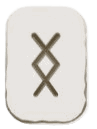
Ingwaz (NG)
System: Elder Futhark
Aett: Third group (3 of 3)
Sound: NG
Meaning: *ingwaz - Ing, a divine or ancestral name
The Name Ing
*Ingwaz contains the name Ing and represents the /ng/ sound. The Old English Rune Poem says Ing was first seen among the East Danes and later departed over the waves, leaving his wagon behind. Ing is often connected with the deity Freyr through the name Yngvi-Freyr, but the history of that relationship is more complex than a simple equation.
Contained Potential
Modern symbolism often sees a seed or enclosed field in the rune's common shape and reads gestation, stored energy, completion, and release. These are fruitful visual interpretations rather than translations of the rune name. Its difficult expression is potential kept sealed too long, premature release, or withdrawal disguised as preparation.
Reflection: What is complete enough to emerge? What still needs protected time? Ingwaz need not be called “always positive”; even fertile potential requires timing and form.
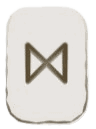
Dagaz (D)
System: Elder Futhark
Aett: Third group (3 of 3)
Sound: D
Meaning: *dagaz - day
Day and the Change of Light
*Dagaz means day and represents /d/. The name offers daylight, the passage between darkness and light, and the measured unit of a day. Popular claims that the stave historically depicts a butterfly or the infinity symbol are visual analogies, not evidence from early inscriptions.
Breakthrough Without Finality
In modern reading, Dagaz can signify recognition, a turning point, altered perspective, completion through reversal of conditions, or the moment when what was hidden becomes visible. Dawn is powerful, but it does not complete the whole day. Insight still requires response.
Reflection: What has changed because it can now be seen? What action belongs to the new light? Dagaz is symmetrical in common form, yet calling it “always positive” removes the demanding adjustment that every real transition brings.
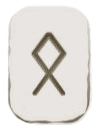
*Othala refers to inherited estate, ancestral property, or homeland and represents /o/. Its semantic field includes land, kinship, legal inheritance, belonging, and what passes between generations. Heritage is not automatically virtuous: every inheritance contains responsibilities, exclusions, debts, and choices about what should continue.
Roots Without Ideology
Modern esoteric reading can use Othala for home, ancestry, cultural memory, stewardship, legacy, and the boundary that protects a place. It may also expose inherited prejudice, possessiveness, or nostalgia that refuses change.
Reflection: What has been entrusted to you? What should be preserved, repaired, transformed, or refused before it is passed onward? A modified Othala was used by Nazi organizations and the rune remains subject to extremist appropriation. The ancient character is not inherently a hate symbol, but modern context and presentation must never be ignored.
Younger Futhark
The 16-rune Younger Futhark was the principal Scandinavian rune-row of the Viking Age. Fewer characters did not mean a simpler spoken language: each sign often carried several sounds. The labels below give concise name-senses drawn from later Scandinavian rune-poem traditions; where the poems disagree, both senses are shown.
Runes appeared on memorial stones, wood, bone, metal, tools, jewelry, trade objects, and personal messages. Some inscriptions are prayers or charms, but many are as practical as a name, a statement of ownership, or a record of who carved the text.
Fé (Cattle / Wealth)
Úr (Drizzle or Slag; traditions vary)
Þurs (Giant)
Áss / Óss (God or Estuary; traditions vary)
Reið (Riding)
Kaun (Ulcer)
Hagall (Hail)
Nauðr (Need / Constraint)
Íss (Ice)
Ár (Year / Good Harvest)
Sól (Sun)
Týr (The God Tyr)
Bjarkan (Birch)
Maðr (Person / Human)
Lögr (Water / Sea)
Ýr (Yew / Bow; traditions vary)
Odin and the Runes
In stanzas 138-139 of the Old Norse poem Hávamál, Odin says that he hung for nine nights on a windswept tree, wounded by a spear and offered to himself. Without bread or drink, he looked downward, took up the runes with a cry, and fell back from the ordeal. The poem does not name the tree in this passage, although it is commonly and plausibly identified with Yggdrasill.
This is a myth of costly knowledge: wisdom is not handed over without discipline, risk, and transformation. It is also a medieval poetic witness, not an eyewitness account of when the writing system was invented. Mythic origin and historical development answer different questions and can be honored without being confused.
Rune Names and Rune Poems
No complete Elder Futhark rune poem survives from the centuries when its 24-character row was in use. The Old English Rune Poem and the later Norwegian and Icelandic rune poems preserve related names and compact poetic reflections, but they belong to different languages, periods, and rune-rows. They are essential evidence, not a single secret manual of divination.
This matters most where the traditions diverge. The sixth rune may be reconstructed through an “ulcer” name or read through the Old English “torch” tradition; the name of Perthro remains obscure; and Algiz involves uncertainties of name, sound development, and later evidence. A professional reading states these limits instead of filling every gap with certainty.
Runes and Historical Magic
Runic writing was sometimes used to act upon the world. Archaeology and inscriptions preserve possible amulets, charm words, repeated or non-linguistic sequences, healing formulas, invocations, and curses. Literary sources also describe runes used in healing, protection, speech, victory, and harmful magic. The evidence is real, but fragmented and highly dependent on context.
A magical text written in runes does not prove that every rune carried a permanent catalog of colors, elements, chakras, or divinatory outcomes. Latin and Greek letters also appear in ancient spells without making every letter inherently magical. The force may lie in the words, the act of carving, coloring, naming, secrecy, ritual authority, material, placement, or a combination of these.
Bindrunes and Galdr
Historical bindrunes join two or more rune-staves, sometimes as a compact writing device and sometimes in contexts that may be emblematic or magical. Modern bindrunes designed by combining several desired “meanings” are a living form of contemporary sigil craft, not a fully preserved Viking-age recipe system.
Galdr refers broadly to sung or chanted incantation in Old Norse sources. Voice, meter, naming, and repetition can be meaningful in present-day practice, but a standardized mantra and pitch assigned to each Elder Futhark rune is a modern reconstruction. It should be presented as practice, not recovered certainty.
Modern Esoteric Reading
Modern rune work can be serious, disciplined, and spiritually valuable without claiming an unbroken method from antiquity. A rune's reconstructed name offers a symbolic seed; rune poems and inscriptions provide historical tension; meditation, journaling, ritual, and divination develop contemporary meanings from that foundation.
Colors and classical elements may be adopted as personal or school-specific correspondences, but there is no historically universal table assigning one element and color to each Elder Futhark rune. The same applies to fixed god, planet, herb, crystal, or chakra correspondences. If used, the system and source should be named.
Divination and Rune Casting
Germanic peoples practiced forms of lot divination. Tacitus, writing around 98 CE, describes marked pieces cut from a fruit-bearing branch and cast on a white cloth, but he does not identify the marks as runic letters. No surviving source gives the familiar modern Elder Futhark spreads or a complete ancient dictionary of one-rune predictions.
Single-rune draws, three-rune readings, cloth casts, runic crosses, and “rune of the day” practices belong to modern divination. Reversed meanings are also modern and optional; early runic writing could change direction or mirror forms without creating a second divinatory definition. A rune can contain constructive, difficult, and ambiguous possibilities without being turned upside down.
Ask an open question: prefer “What requires attention?” to a demand for an infallible prediction.
Read the name first: begin with the literal name-sense and source context before adding intuition.
Read relationships: position, neighboring runes, repetition, and the question shape a modern reading.
Record the reading: a journal reveals projection, repeated themes, and interpretations that did or did not prove useful.
Keep agency: do not use a cast to replace medical, legal, financial, or safety decisions.
Responsible Practice and Modern Misuse
Approach runes as cultural artifacts, writing, mythic symbols, and living modern tools - not as proof of racial purity or exclusive ancestry. During the twentieth century, Nazi and later extremist movements appropriated altered or isolated forms of several runes, especially Othala and Sowilo, as well as related Germanic-looking symbols. This history does not make the ancient rune-rows inherently hateful, but context, design, combination, and public use matter.
Study the inscription before the slogan, distinguish reconstruction from evidence, and state which modern tradition you are practicing. Respect is shown through precision: not by pretending uncertainty does not exist, but by refusing to make the past say whatever the present wants.
Summary
Runes are powerful because they stand at the meeting point of language, material action, memory, myth, and interpretation. Their historical record includes ordinary messages and extraordinary ritual uses. Their modern esoteric life adds meditation and divination. The strongest practice preserves both truths: it remains open to mystery while remaining honest about evidence.

 Home
Home Knowledge
  Tools
Tools  Practice
  Divination
  Profile
 Contact
 Fehu (F)
 Uruz (U)
 Thurisaz (TH)
 Ansuz (A)
 Raidho (R)
 Kenaz (K/C)
 Gebo (G)
 Wunjo (W)
 Hagalaz (H)
 Nauthiz (N)
 Isa (I)
 Jera (J/Y)
 Eihwaz (ï)
 Perthro (P)
 Algiz (Z)
 Sowilo (S)
 Tiwaz (T)
 Berkano (B)
 Ehwaz (E)
 Mannaz (M)
 Laguz (L)
 Ingwaz (NG)
 Dagaz (D)
 Othala (O)