
 Home
Home Knowledge
  Tools
Tools  Practice
  Divination
  Profile
 Contact
Moon Phases

The Moon, as a celestial body, has for centuries been at the center of esoteric, magical, and occult traditions. Its influence on human life, nature, emotions, spirituality, and magical practices is widely discussed in various cultures. Below is an extensive discussion on the esoteric, magical, and occult significance of the Moon, including its phases, symbolism, and practical application.
The Eight Phases in Detail
Cycle function, sky, best use and esoteric reading for each phase. Selecting a phase above opens the same text in a reading pane.
 NEW MOON
Cycle Function: Conception, stillness, orientation
Sky: Exact Sun-Moon conjunction; ordinarily invisible
Best Use: Listening, choosing a direction, setting one grounded intention
The Hidden Beginning
The New Moon is the exact moment when the Moon and Sun share the same ecliptic longitude as seen from Earth. The illuminated half of the Moon faces mostly away from us, so the Moon is normally lost in the Sun's glare. A thin crescent seen after sunset is not the New Moon itself; it is the first visible Waxing Crescent.
This distinction strengthens the symbolism. The New Moon is not an empty night waiting to be filled with demands. It is a threshold at which the next cycle exists as potential but has not yet taken visible form.
Occult Function: The Vessel Before the Form
In lunar magic, the New Moon can be approached as a sealed vessel, fertile darkness, or the silent point before a word is spoken. Its work is inward: clearing noise, identifying the true motive beneath a wish, and deciding what deserves energy during the coming cycle.
Intentions are strongest when they describe your own participation. "I will give focused time to my work" is more workable than an attempt to command another person or guarantee an external result. The ritual marks a commitment; repeated action gives that commitment a body.
Astrological Lens
Every New Moon is a conjunction of the Sun and Moon. Symbolically, conscious direction and instinctive response meet at one point. The zodiac sign describes the style of the new cycle, while the natal house shows the area of life in which it may be personally relevant. Close aspects to other planets can support, complicate, or redirect the theme.
A New Moon in Aries may emphasize initiative; one in Cancer may turn attention toward belonging and protection; one in Capricorn may ask for structure and responsibility. These are starting principles, not fixed predictions.
Threshold Practice
- Sit in low light for a few quiet minutes. Let the absence of visible moonlight represent openness, not deficiency.
- Write what is ending, what is beginning, and what remains unknown.
- Choose one intention that is ethical, specific, and within your sphere of action.
- Name the first practical step and give it a date. Keep the page until the Full Moon review.
A candle, bowl of clean water, or unlit dark cloth may serve as a focal symbol, but no object is required. If a candle is used, keep it attended and extinguish it when the practice ends.
Correspondences
Symbolic colors: black for the unseen, silver for reflection, white for an unmarked beginning.
Stones often used: moonstone for receptivity, labradorite for liminality, smoky quartz for grounding.
Botanical atmosphere: lavender or rosemary may be used for scent or symbolism when safe for the practitioner.
Correspondences vary by lineage. They are a language for concentrating meaning, not compulsory ingredients.
Dark Moon and New Moon
Some practitioners call the last invisible nights before conjunction the Dark Moon and reserve them for rest, ancestor work, shadow inquiry, or closure. Others use Dark Moon and New Moon interchangeably. State which definition you are using; clarity is more valuable than pretending there is one universal occult rule.
Questions for the Cycle
- What deserves to begin, and what is merely an impulse?
- What can I influence directly?
- What first action would make this intention real?
 WAXING CRESCENT
Cycle Function: Emergence, commitment, first movement
Sky: A growing crescent visible after sunset
Best Use: Beginning the work, gathering support, building momentum
When Intention Becomes Visible
The Waxing Crescent appears in the western sky after sunset, a few days after the exact New Moon. Its illuminated portion grows each night. In the Northern Hemisphere the bright edge usually appears on the right; in the Southern Hemisphere it appears reversed, and its apparent tilt changes with latitude and season.
Symbolically, this is the first proof of emergence. The idea formed in darkness must now survive contact with time, effort, uncertainty, and the material world.
Occult Function: Invitation and Increase
Waxing magic traditionally concerns increase: courage, skill, friendship, opportunity, resources, and the healthy development of a project. The deeper principle is not passive attraction but participation. You make room for what you seek, offer it a path of entry, and begin behaving in accordance with the intention.
This phase is well suited to blessing tools, opening a course of study, beginning a devotional rhythm, or strengthening qualities already present in seed form. Work aimed at controlling another person's will is inconsistent with ethical lunar practice.
The Astrological Movement
The Moon is moving away from its conjunction with the Sun and toward the First Quarter square. The new cycle is differentiating: feeling, habit, and circumstance begin to test the original purpose. The Moon's zodiac sign changes every two to three days, coloring the immediate mood, while the New Moon sign remains the broader cycle theme.
The First-Step Rite
Place your written New Moon intention before you. Beneath it, write three modest actions. Complete the smallest one before the night ends or schedule it within twenty-four hours. Then mark the action with a simple symbol - a growing curve, a seedling, or an upward line.
If you use a talisman, let it represent a behavior rather than a promise of luck. A key may signify access, a coin stewardship, a pen communication, and a stone steadiness. Carry it only as a reminder to act.
Growth Without Force
The shadow of the Waxing Crescent is impatience. Early growth is fragile, and constant checking can become a form of doubt. Protect the beginning from unnecessary exposure, but do not hide it from useful feedback. Feed what is alive; do not inflate what has no foundation.
Correspondences
Symbolic colors: pale green, soft gold, fresh white.
Stones often used: carnelian for initiative, aventurine for possibility, clear quartz for focus.
Plants: basil, rosemary, and young leaves symbolize vitality and directed growth.
Questions for the Cycle
- What is the smallest credible step forward?
- What support or skill does this intention require?
- Am I nurturing growth, or demanding immediate proof?
 FIRST QUARTER
Cycle Function: Decision, friction, decisive action
Sky: Half illuminated; roughly 90 degrees east of the Sun
Best Use: Meeting resistance, setting boundaries, choosing a course
Why a Half Moon Is Called a Quarter
At First Quarter, half of the lunar disk appears illuminated, but the Moon has completed about one quarter of its orbit from New Moon to New Moon. It is roughly ninety degrees east of the Sun, commonly visible from afternoon through evening and setting around midnight.
The clean division of light and shadow gives this phase its central image: a choice cannot remain theoretical forever. One direction must receive energy, and another must be left behind.
Occult Function: The Test of Will
The First Quarter is a traditional moment for courage, protection, obstacle work, and strengthening resolve. It does not promise a path without resistance. Instead, it reveals whether the intention has enough structure to continue.
Useful work now includes establishing a boundary, correcting a weak plan, speaking a necessary truth, or confronting avoidance. The aim is not aggression. Mature will is the ability to direct force without being possessed by it.
Astrological Lens: The Opening Square
The Moon forms a waxing square to the Sun. In astrology, the square is dynamic tension: instinct and purpose pull from different positions, generating the pressure needed for development. The signs involved describe the qualities seeking integration, while natal contacts show where the tension may feel personal.
This is often called a crisis of action. "Crisis" here means a turning point that requires choice, not a prediction of disaster.
Crossroads Working
- Divide a page into two columns: What moves the work forward and What keeps it stalled.
- Name the one obstacle that is currently decisive.
- Choose a response: remove it, reduce it, ask for help, or consciously change the goal.
- Close the rite by taking one immediate physical action - send the message, prepare the tool, make the appointment, or clear the workspace.
The Shadow of Action
Under pressure, resolve can turn into haste, conflict, or an obsession with proving strength. Pause before acting if anger is carrying the decision. A boundary protects what matters; punishment only multiplies the struggle.
Correspondences
Symbolic colors: red for courage, gold for directed will, deep green for endurance.
Stones often used: tiger's eye for discernment, carnelian for movement, hematite for grounded resolve.
Plants: ginger, nettle, or oak imagery may represent heat, defense, and steadfastness; handle physical plants according to their real safety requirements.
Questions for the Cycle
- What decision have I postponed?
- Which obstacle contains useful information?
- What would courageous but measured action look like?
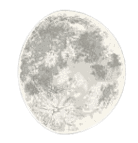 WAXING GIBBOUS
Cycle Function: Refinement, adjustment, sustained effort
Sky: More than half illuminated and still increasing
Best Use: Editing, strengthening, preparing for culmination
The Almost-Full Moon
During the Waxing Gibbous phase, more than half of the Moon's visible disk is illuminated, and the light continues to increase toward Full Moon. It rises before sunset, dominates much of the night, and sets after midnight.
Its shape can create a sense of "nearly there," yet this is not a waiting room. It is the workshop of the cycle - the place where enthusiasm is tested by craft.
Occult Function: Consecration Through Repetition
The magical principle of this phase is refinement. Energy has already been raised; now it must be directed accurately. Repetition, correction, study, and devotion matter more than dramatic gestures. This is a strong time to improve a ritual text, rehearse a presentation, strengthen a protective routine, or purify the motive behind a desire.
Waxing Gibbous work may amplify what is present, including flaws. Before asking for "more," ask whether the vessel can hold it.
Astrological Movement Toward Opposition
The Moon is approaching its opposition with the Sun. Symbolically, inner material is moving toward visibility and relationship with the outer world. Feedback becomes harder to ignore. The approaching Full Moon can reveal where a plan is coherent and where it was built on fantasy, borrowed expectation, or incomplete information.
The Refinement Table
Place one representation of your current work before you: a page, schedule, sketch, budget, ritual tool, or written promise. Ask three questions:
- What is already strong and should be preserved?
- What one weakness would most improve the whole if corrected?
- What is unnecessary and can be removed?
Make one real correction during the rite. Dedication is demonstrated by the edit, not by the atmosphere surrounding it.
Patience and Perfectionism
The shadow of this phase is believing that completion must be flawless. Refinement should clarify the work, not delay its encounter with reality. Stop polishing when the next useful information can only come from release, performance, conversation, or experience.
Correspondences
Symbolic colors: amber, indigo, and warm white.
Stones often used: fluorite for organization, sodalite for clear thought, citrine for sustained confidence.
Plants: rosemary for remembrance, bay for purpose, and lavender for composure.
Questions for the Cycle
- What needs refinement rather than expansion?
- Which criticism is useful, and which is only noise?
- How will I know the work is ready to be revealed?
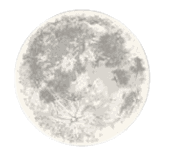 FULL MOON
Cycle Function: Revelation, culmination, relationship
Sky: Sun-Moon opposition; the visible disk appears fully lit
Best Use: Witnessing results, celebration, divination, honest review
The Moon in Full Light
The Full Moon occurs when the Moon is approximately opposite the Sun in the sky. Its Earth-facing side appears fully illuminated; it rises near sunset, is visible through most of the night, and sets near sunrise. A lunar eclipse does not occur every Full Moon because the Moon's orbit is tilted relative to Earth's path around the Sun.
What began invisibly is now exposed to view. This makes the Full Moon a compelling symbol of culmination, revelation, relationship, and consequence.
Occult Function: Illumination, Not Omnipotence
Many contemporary practitioners treat the Full Moon as a high point for ceremony, divination, gratitude, blessing, and the charging of symbolic objects. Yet it is not universally the "most powerful" lunar phase. Its distinctive power is visibility: it shows what has developed, what has become excessive, and what can no longer remain unconscious.
Full Moon work is especially suited to witnessing and evaluation. Celebrate a genuine result. Name a truth that has emerged. Let a divination practice reveal questions and patterns rather than surrendering judgment to a prediction.
Astrological Lens: The Opposition
At Full Moon, the Sun and Moon occupy opposite zodiac signs. Astrology reads an opposition through polarity: self and other, private need and public purpose, stability and change, control and surrender. The task is not to declare one side good and the other bad, but to see the relationship between them.
The Full Moon sign describes the mode of emotional revelation; the Sun's opposite sign supplies the counterweight. Natal houses and close planetary aspects determine where this polarity becomes personally meaningful.
Rite of Illumination
- Return to the intention or question recorded at the New Moon.
- List what became visible: progress, resistance, unexpected information, and consequences.
- Offer gratitude for what is real, without pretending every wish has manifested.
- Choose what to complete, what to revise, and what will enter the waning half of the cycle for release.
If you prepare moon water, use a clean covered container and potable water only if it may later be consumed. Do not submerge crystals, herbs, metal, or other materials in drinking water unless their food safety is genuinely known.
Intensity and Discernment
Some people report stronger emotions, unusual dreams, or changes in sleep around a Full Moon, while others notice nothing consistent. Treat personal observations as observations, not universal biological law. A lunar journal over several months is more valuable than expecting yourself to feel what a description says you should feel.
Correspondences
Symbolic colors: silver, pearl white, and deep blue.
Stones often used: moonstone for reflection, clear quartz for clarity, amethyst for contemplation.
Plants: jasmine, white rose, and mugwort have lunar associations in some traditions; research physical safety before burning, ingesting, or applying any plant.
Culture and Context
Lunar festivals and deities belong to distinct histories. Selene is not simply another name for Artemis, Isis, Hecate, or a deity from a different culture. Comparison can be illuminating, but respectful practice preserves differences rather than turning every moon figure into one generic goddess.
Questions for the Cycle
- What is unmistakably visible now?
- What has reached completion, and what has only reached exposure?
- How can I honor success without exaggerating it?
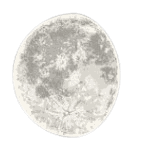 WANING GIBBOUS
Cycle Function: Integration, gratitude, distribution
Sky: More than half illuminated and decreasing
Best Use: Processing results, sharing knowledge, giving back
After the Peak
The Waning Gibbous begins after Full Moon. The visible light is still abundant but decreases night by night. The Moon rises later in the evening and remains prominent into the morning. This phase is sometimes called the Disseminating Moon because what was revealed at fullness is now ready to be understood and circulated.
Occult Function: The Gift of the Harvest
Where the waxing cycle gathered and built, the waning cycle begins to distribute and simplify. Waning Gibbous work concerns gratitude, teaching, testimony, offering, and the wise use of what has been gained. A harvest kept entirely to oneself can spoil; knowledge becomes fertile when it enters relationship.
This is a favorable time to fulfill a promise, thank a helper, share a resource, pass on a lesson, or dedicate part of a success to service. Gratitude here is not denial of pain. It is accurate recognition of what sustained you.
Astrological Integration
The Moon has moved beyond its opposition to the Sun and is heading toward the closing square. The tension of the Full Moon begins to yield meaning. Instead of asking only "What happened?" this phase asks "What did the experience teach, and how should that knowledge change my conduct?"
The Harvest Ledger
Make three short lists:
- Fruit: what matured or became clear.
- Cost: what the result required from you and others.
- Gift: what can now be shared, taught, returned, or offered.
Complete one act of reciprocity. It may be practical and quiet: acknowledge someone's contribution, organize notes for future use, donate an appropriate resource, or teach one thing you have genuinely learned.
Discernment After Success
The shadow of this phase is preaching before understanding. Not every personal experience is a universal law, and not every insight must be broadcast immediately. Integrate first. Share from tested knowledge, with proportion and humility.
Correspondences
Symbolic colors: bronze, violet, and warm silver.
Stones often used: lapis lazuli for truthful expression, amethyst for integration, smoky quartz for grounded perspective.
Plants: sage in the broad symbolic sense of wisdom, rosemary for memory, and grain as an emblem of harvest. Choose culturally and ecologically appropriate materials.
Questions for the Cycle
- What is the real lesson of this culmination?
- Who or what deserves acknowledgment?
- What can I share without overstating what I know?
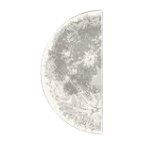 THIRD QUARTER
Cycle Function: Reassessment, release, realignment
Sky: Half illuminated; roughly 90 degrees west of the Sun
Best Use: Ending habits, repairing boundaries, changing direction
The Closing Half Moon
At Third Quarter, also called Last Quarter, half of the Moon's visible disk is illuminated while the lunar cycle is about three quarters complete. The Moon is roughly ninety degrees west of the Sun, typically rising around midnight, visible in the morning sky, and setting around midday.
The First Quarter demanded action; the Third Quarter demands understanding. Both are squares, but this closing square asks what must change now that the consequences of the cycle are known.
Occult Function: Cutting Away with Purpose
This phase supports cleansing, uncrossing, boundary repair, habit interruption, forgiveness, and the ending of agreements that no longer serve their proper purpose. Release is not erasure. The aim is to recover energy from a pattern and redirect it consciously.
Symbolic cord-cutting can mark an internal decision, but it does not control another person or replace direct communication, legal protection, therapy, or practical safety measures. Ritual should support responsible action, not imitate it.
Astrological Lens: The Closing Square
The Moon forms a waning square to the Sun, sometimes described as a crisis of consciousness. The cycle's original purpose is measured against lived experience. Beliefs, roles, and habits that once seemed necessary may now reveal their limits.
The signs and houses involved show the language and area of reorientation. The productive question is not "What is being taken from me?" but "What understanding now makes a different choice possible?"
Rite of Reorientation
- Name one pattern that has completed its usefulness.
- Write what it once protected or provided; release becomes wiser when its former purpose is understood.
- Choose the boundary, replacement habit, or conversation that will prevent the pattern from simply returning.
- Tear the paper by hand or fold it away for later reflection. Burning is unnecessary; if flame is used, use a fireproof vessel and remain present.
Forgiveness Without Denial
Forgiveness can mean releasing your attachment to repetition, but it does not require reconciliation, access, or the denial of harm. The Third Quarter favors clean endings: truthful, proportionate, and supported by boundaries.
Correspondences
Symbolic colors: charcoal, dark blue, and muted white.
Stones often used: obsidian for honest reflection, hematite for grounding, black tourmaline as a protective symbol.
Plants: rosemary for clarity, rue in traditions where it is safely and appropriately used, and fallen leaves as natural emblems of release.
Questions for the Cycle
- What has completed its purpose?
- What must replace the habit I release?
- Which boundary would turn insight into change?
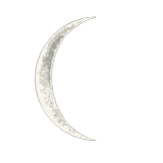 WANING CRESCENT
Cycle Function: Completion, surrender, restoration
Sky: A diminishing crescent visible before sunrise
Best Use: Rest, dream work, quiet closure, preparing for silence
The Last Visible Light
The Waning Crescent is the final visible phase before New Moon. It appears low in the eastern sky before sunrise and grows thinner each morning as the Moon approaches conjunction with the Sun. It is also called the Balsamic Moon in some modern astrological traditions.
This is the exhale of the lunar month. The cycle no longer asks for expansion or public proof. Its wisdom comes through reduction, quiet, and the return of experience to the inner world.
Occult Function: Return to the Source
Waning Crescent practice favors rest, dream incubation, ancestor remembrance, contemplation, gentle cleansing, and the completion of small unfinished matters. It is a liminal period: the former cycle is dying away, while the next has not yet declared its form.
Surrender does not mean helplessness. It is the deliberate release of unnecessary effort. Some questions are clarified by action; others need silence long enough for a deeper answer to surface.
Astrological Completion
The Moon is closing its distance to the Sun and completing the current lunation. Astrologically, this phase gathers memory, consequence, and intuition before the next conjunction. Its tone is receptive rather than declarative. The Moon's sign may describe how rest or closure is sought, but no sign removes the need for ordinary care and judgment.
The Quieting Practice
- Lower stimulation for a short period: dim the room, silence notifications, and sit without trying to produce an answer.
- Write three lines: what I completed, what I release, what I will not decide yet.
- Wash your hands in clean water as a simple sign of closure, then empty the water respectfully.
- Prioritize sleep or restorative activity. Let rest itself be the offering.
Dream and Ancestor Work
If dream work belongs to your practice, keep a notebook by the bed and record images before interpreting them. Ask one open question rather than demanding an omen. In ancestor work, distinguish remembrance from certainty: a photograph, name, story, or inherited object can hold relationship without requiring dramatic supernatural claims.
The Shadow of Withdrawal
Rest can become avoidance, just as action can become compulsion. Complete necessary responsibilities and seek support when exhaustion, grief, anxiety, or sleep disturbance persists. The lunar phase can frame self-care, but it is not a diagnosis or a substitute for care.
Correspondences
Symbolic colors: midnight blue, smoke grey, and soft violet.
Stones often used: amethyst for contemplation, smoky quartz for release, moonstone for transition.
Plants: chamomile and lavender symbolize rest; use only in forms that are physically safe for you.
Approaching the Dark Moon
As the crescent disappears, some traditions enter a Dark Moon period dedicated to non-action, shadow inquiry, or closure. Others begin New Moon work immediately at conjunction. Both approaches can be coherent when practiced consistently and named clearly.
Questions for the Cycle
- What can remain unfinished without becoming a burden?
- What has this cycle taught my body as well as my mind?
- What becomes audible when I stop striving?
The Moon: Cycle, Symbol, and Practice
The Moon is both a physical world and a living symbol. Astronomically, its phases arise from the changing angle between the Sun, Earth, and Moon across a synodic cycle of about 29.5 days. Astrologically, the cycle describes a changing relationship between solar purpose and lunar response. In esoteric practice, it becomes a disciplined way to time reflection, action, culmination, release, and rest.
A Three-Layer Approach
- Astronomy: What is happening in the sky - illumination, visibility, timing, and the Moon's position relative to the Sun.
- Astrology: The symbolic geometry of conjunction, square, and opposition, modified by zodiac sign, house, and aspects.
- Esoteric practice: Ritual, meditation, divination, and correspondence used as symbolic methods of attention rather than guarantees of an outcome.
The Eightfold Lunar Rhythm
The eight phases form one continuous movement: the New Moon gathers potential; the Waxing Crescent commits; the First Quarter chooses and acts; the Waxing Gibbous refines; the Full Moon reveals and culminates; the Waning Gibbous integrates and shares; the Third Quarter releases and reorients; and the Waning Crescent rests and returns experience to silence.
No phase is universally "the most powerful." Power changes its form. A beginning is powerful differently from a culmination, and release requires a different kind of strength from growth. Good lunar practice asks what the moment is suited for instead of forcing every desire into the same ritual.
Traditional Lunar Symbolism
Across many Western esoteric systems, the Moon is associated with receptivity, memory, dreams, imagination, tides, silver, mirrors, and the element Water. These are correspondences, not scientific properties. Other cultures preserve their own lunar calendars, deities, rites, and meanings; they should be approached in their proper context rather than blended into a single universal mythology.
Essential Distinctions
- New Moon and Dark Moon: Astronomically, the New Moon is the exact Sun-Moon conjunction and is ordinarily invisible. In modern practice, "Dark Moon" often names the final invisible period before that conjunction, although traditions use these terms differently.
- Waxing and Waning: Waxing means visible light is increasing; waning means it is decreasing. The illuminated side appears reversed between the Northern and Southern Hemispheres.
- Symbol and certainty: Lunar work can focus attention, mark transitions, and deepen self-observation. It does not remove the need for practical action, consent, medical care, or sound judgment.
How to Work with the Cycle
Begin with observation. Record the phase, zodiac sign, your mood, dreams, decisions, and concrete actions. After several cycles, look for your own repeating patterns instead of assuming that a general description must fit you. Keep rituals proportionate: one clear intention, one embodied action, and one honest review are often more effective than elaborate performance.
Practice note: Treat stones, herbs, smoke, flame, and water responsibly. Do not ingest ritual water that has held crystals or non-food-safe materials, never leave a candle unattended, and choose plants with respect for health, ecology, and living traditions.