
 Home
Home Knowledge
  Tools
Tools  Practice
  Divination
  Profile
 Contact
Alchemy
Alchemy: Matter, Meaning, and Transformation
Alchemy was not one single doctrine and it was never only a code for self-improvement. In the Western tradition it joined hands-on work with minerals, metals, salts, acids, pigments, medicines, furnaces, and glassware to natural philosophy, cosmology, religion, and an intentionally veiled symbolic language. Its practitioners asked how substances change, what makes a metal what it is, whether nature can be perfected by art, and whether the operator must also be purified by the work.
The best-known goals were metallic transmutation, the Philosopher's Stone, and powerful medicines or elixirs. Some authors described these materially, some placed them within Christian, Hermetic, or other sacred frameworks, and some allowed several meanings to coexist. Modern spiritual alchemy draws real inspiration from this inheritance, but it is an interpretation of it rather than a complete description of what every historical alchemist believed.
How to Read Alchemical Texts
Alchemical writing often operates on several levels at once. Keeping them distinct makes the tradition richer and prevents metaphor from replacing history.
- Operative: substances were heated, dissolved, separated, distilled, sublimed, crystallized, and recombined in workshops and laboratories.
- Theoretical: authors explained change through systems such as the four elements, qualities, planetary metals, the sulphur-mercury theory, or the Paracelsian Three Principles.
- Religious and emblematic: death and rebirth, marriage, kings and queens, dragons, birds, and celestial bodies expressed hidden relationships within nature and the Great Work.
- Psychological and spiritual: later readers, especially from the twentieth century onward, interpreted alchemical images as maps of inner conflict, integration, and transformation.
No single key unlocks every text. A lion may indicate a material, a color, a chemical action, a planetary force, or several of these according to the author and manuscript.
A Historical Map
Greco-Egyptian beginnings: the earliest surviving Western alchemical writings emerged in Hellenistic and Roman Egypt. Greek natural philosophy, Egyptian craft knowledge, metallurgy, dyeing, medicine, and religious speculation met in this environment. Zosimos of Panopolis, active around the end of the third and beginning of the fourth century CE, is among the earliest alchemical authors whose works survive in substantial form.
Arabic-language alchemy: from the eighth century onward, scholars working in Arabic translated, expanded, criticized, and reorganized earlier materials. The large body of works attributed to Jabir ibn Hayyan is now treated as a complex corpus rather than the transparent output of one easily documented author. Al-Razi and other writers described substances, apparatus, classifications, and medical or transmutational aims with considerable practical detail.
Latin Europe and early modern chymistry: translations from Arabic helped establish alchemy in medieval Europe. Over time it became entangled with mining, metallurgy, pharmacy, medicine, assaying, pigment production, natural magic, and courtly patronage. Paracelsian medicine placed chemical preparations and the Three Principles in a new medical-theological framework. In the sixteenth and seventeenth centuries, the older boundary between alchemy and chemistry did not resemble the modern division; historians often use chymistry for this mixed field.
Related traditions beyond the West: Chinese waidan (external elixir traditions) and neidan (inner cultivation traditions), as well as Indian rasayana and rasa-shastra, developed in their own religious, medical, and material settings. They should not be presented as branches that simply spread outward from Egypt. Comparison can be illuminating, but each tradition deserves its own history.
Hermes Trismegistus belongs to the legendary authority of the Hermetic tradition, not to securely documented biography. Texts attributed to Hermes were composed by different authors across different periods. The famous maxim usually rendered as “as above, so below” comes from the Emerald Tablet; it should not be treated as a summary of every work in the broader Hermetica.
Prima Materia and the Philosopher's Stone
Prima materia, or first matter, names the obscure starting ground of the Work. Alchemical authors did not agree on one universally identifiable substance. It might be described as common yet overlooked, vile yet precious, undivided, chaotic, watery, dark, or capable of receiving every form. Such contradictions were deliberate: they guarded laboratory knowledge while pointing to matter before it had been perfected or differentiated.
The Philosopher's Stone, lapis philosophorum, was the corresponding goal. In transmutational texts it could be understood as a prepared agent or medicine able to perfect metals, often through a small projected quantity. In medical and religious readings it could signify a universal medicine, restored harmony, incorruptibility, or wisdom. Historical texts may move between literal substance and sacred symbol without reducing one to the other.
The Four Elements in Western Alchemy
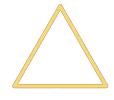
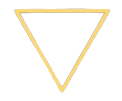
Fire, water, air, and earth were principles of composition and change, not modern chemical elements. Their paired qualities - hot, cold, moist, and dry - helped alchemists describe how matter acted and how one state might pass into another.
Fire
Water
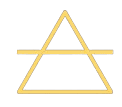
Air
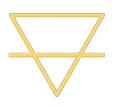
Earth
Tria Prima: Sulphur, Mercury, and Salt
The Three Principles became especially important in the alchemy and medicine associated with Paracelsus and later Paracelsians. They are not a universal doctrine shared by all periods of alchemy, and they should not be confused with three modern chemical ingredients.
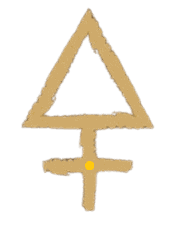
Sulphur
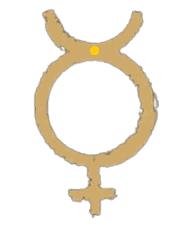
Mercury

Salt
As principles, Sulphur commonly expresses combustibility, activity, and distinctive character; Mercury expresses volatility, liquidity, and mediation; Salt expresses fixity, body, and what remains. The familiar body-soul-spirit correspondence is useful in some Paracelsian and modern readings, but authors assigned the triad differently. Earlier sulphur-mercury theories of metallic generation are related to this vocabulary yet are not identical to the later Tria Prima.
The Seven Planetary Metals
European alchemy linked seven familiar metals with the seven traditional planets. The correspondence organized color, temperament, mythology, medicine, and laboratory behavior into one symbolic cosmos:
- Sun - Gold: radiance, constancy, perfection.
- Moon - Silver: reflection, receptivity, change.
- Mercury - Quicksilver: mobility, mediation, ambiguity.
- Venus - Copper: attraction, beauty, generative union.
- Mars - Iron: force, cutting, conflict, discipline.
- Jupiter - Tin: expansion, authority, tempering.
- Saturn - Lead: heaviness, time, limitation, the difficult beginning.
These are historical correspondences, not scientific claims about planetary influence on metals. Within alchemical imagery, however, they allow a material to become a character in a drama of corruption, purification, death, and renewal.
Sol, Luna, and Coniunctio
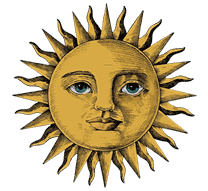
The Sun and Moon often represent gold and silver, fixed and volatile tendencies, king and queen, or paired powers whose purified union generates a new state. Their marriage is an emblem of transmutation, not a single formula.
Sun / Sol

Moon / Luna
Coniunctio / Marriage
The general alchemical motif of conjunction should be distinguished from The Chymical Wedding of Christian Rosenkreutz, an anonymous Rosicrucian narrative first published in 1616. The book uses wedding imagery, but it did not create the older and broader alchemical idea of coniunctio.
Solve et Coagula
Solve means to loosen, dissolve, or separate; coagula means to curdle, fix, or bring into a stable body. Together they express a recurrent alchemical rhythm: release a substance from an unsuitable form, discriminate its parts, purify them, and reunite them in a more coherent form. The formula does not mean destruction for its own sake. Dissolution without renewed form disperses the work; fixation without openness leaves it inert.
As an esoteric principle, the phrase can describe disciplined revision: inherited structures are examined, what is essential is retained, and insight is embodied in action. This is a modern contemplative application, not a substitute for the phrase's material and textual history.
The Great Work and Its Color Signs
Magnum Opus, the Great Work, is a later organizing name for the labor of preparing the Stone or bringing a chosen matter toward perfection. Color changes mattered because they could be read as signs that the material had entered a new condition. Texts do not present one invariable timetable: some emphasize three principal colors, others four, and individual operations may repeat.
Nigredo - blackening. Putrefaction, decomposition, obscuration, or the reduction of an old form. In a modern inner reading, it can symbolize meeting confusion or disowned material, but it should not be casually equated with clinical depression.
Albedo - whitening. Washing, clarification, separation from impurity, and the appearance of a cleaner or more reflective state. Lunar imagery is frequent.
Citrinitas - yellowing. A yellow or golden dawn associated in some schemes with maturation and solar awakening. It is prominent in certain four-color accounts but is often absorbed into rubedo in later three-stage descriptions.
Rubedo - reddening. The red culmination: tincture, animation, completion, or the fixing of a perfected state. Its meaning depends on the work being described; it is not a historical promise that a person reaches permanent psychological perfection.
Seven Operations: A Reading Framework
This page uses a widely circulated seven-operation sequence as a clear teaching framework. Historical alchemical texts vary greatly in the number, name, and order of operations; the sequence below is useful, but it is not a universal ancient canon.

Calcination

Dissolution
Separation
Conjunction
Fermentation

Distillation
Coagulation
The Laboratory and the Discipline of Attention
Alchemy developed through repeated contact with matter. Furnaces regulated heat; crucibles endured fire; alembics and retorts guided vapors; mortars reduced solids; filters, baths, and vessels separated or contained changing substances. Distillation, calcination, sublimation, digestion, solution, and crystallization were physical procedures before they became modern metaphors. Their results contributed to practical knowledge in pharmacy, metallurgy, pigments, glassmaking, and chemical apparatus, even though alchemical theories and goals were not simply early versions of modern chemistry.
Safety: historical alchemical literature includes mercury, lead, arsenic compounds, corrosive acids, toxic fumes, and dangerous heating. This page explains symbols and history; it does not provide laboratory instructions. Do not reproduce historical recipes or improvised transmutation experiments. Symbolic reflection requires no ingestion, burning, vaporizing, or handling of hazardous substances.
A Vocabulary of Emblems
- Ouroboros: the serpent consuming its tail can signify circularity, self-renewal, unity, or matter feeding upon itself. It is important in alchemical imagery, but it is not an exclusive or automatic symbol of prima materia.
- Rebis or alchemical androgyne: a doubled figure representing a union of differentiated powers after purification. Historical gender imagery is symbolic and culturally situated; it should not be treated as a rule about modern identity or biological sex.
- Green Lion: a deliberately unstable emblem that can signify a devouring solvent, raw vitality, immature matter, or a specific substance according to context.
- Dragon: volatile, poisonous, chaotic, or mercurial matter; when winged or restrained, it may mark changes in volatility and fixation.
- Pelican, phoenix, raven, and white bird: circulation, renewed life, blackening, whitening, or volatile ascent. Their meanings depend on the sequence in which they appear.
- Athanor: the furnace of sustained heat, often made an emblem of patient, regulated transformation.
Jung and Modern Spiritual Alchemy
In the twentieth century, C. G. Jung read European alchemical images as projections and symbolic anticipations of psychic processes. Nigredo, coniunctio, Mercurius, and the Stone entered his account of individuation - the difficult movement toward a more integrated personality. This interpretation profoundly shaped modern occultism, depth psychology, art, and self-development.
Jung's work is historically influential, but it is a modern interpretive framework. Medieval and early modern operators were not secretly writing Jungian psychology centuries before Jung. A responsible contemporary practice can use alchemical language for reflection while saying clearly when it has moved from historical meaning to psychological analogy.
Alchemical Symbols
Manuscripts and printed books used signs for substances, planets, metals, weights, equipment, and operations. Meanings and graphic forms could vary by author, date, and workshop, so a symbol table is a reference point rather than a universal decoder.

Approaching the Great Work
Alchemy is most compelling when none of its dimensions is erased. It is a history of substances and tools, a philosophy of living matter, a sacred and often secretive art of correspondence, and a symbolic archive that modern readers continue to reinterpret. Its central lesson is not a slogan promising effortless transformation. The Great Work demands observation, discrimination, proportion, patience, and the repeated testing of what can endure.


