In Jungian psychology, an archetype is not a stock character, a fixed personality type, or a symbol with one universal translation. It is an underlying pattern of psychic possibility. We encounter it indirectly through archetypal images: recurring figures, situations, emotions, and motifs that take culturally specific forms in dreams, myths, religion, art, and fantasy.
Archetypal language is powerful because it connects personal experience with patterns larger than the individual. It can illuminate a conflict, vocation, relationship, or stage of development; it should not be used to reduce a person to a label. Esoteric traditions may interpret similar patterns metaphysically, but a spiritual correspondence is not automatically the same thing as Jung's psychological theory.
A Later Twelve-Archetype Framework
Jung did not publish a canonical list of twelve personality archetypes. The twelve-part map below is a later, post-Jungian framework developed by Carol S. Pearson and subsequently adapted in personal development, storytelling, and brand psychology. It is included here as a practical vocabulary of recurring motivations — not as Jung's original classification and not as a clinical assessment.
Each pattern carries a gift, a shadow, and a developmental task. A person can express several at once, move between them over time, or meet them as figures in stories and dreams.
The Twelve Archetypes in Detail
Central motive, gift, shadow risk and developmental task for each pattern. Selecting an archetype above opens the same text in a reading pane.
The Innocent / Idealist
Central Motive: Trust, safety, and renewal.
Gift: Hope, sincerity, and moral clarity.
Shadow Risk: Denial, naivety, or dependence on rescue.
Developmental Task: Preserve openness while learning discernment.
The Innocent / Idealist
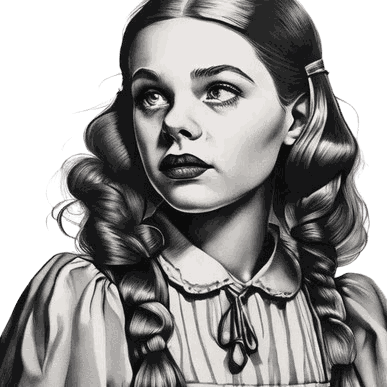
This pattern meets life with the intuition that goodness, simplicity, or a new beginning remains possible. It appears in stories of protected gardens, miraculous children, restored worlds, and travelers whose sincerity exposes the cynicism around them.
More Than Naivety
The Innocent's strength is the ability to trust without becoming hardened by experience. Its shadow appears when hope refuses evidence, purity becomes moral superiority, or safety is expected to come from an ideal authority. Integration does not destroy innocence; it gives innocence boundaries and judgment.
Reflective Question
Where does trust restore your life, and where are you using optimism to avoid a necessary truth?
The Everyperson / Realist
Central Motive: Belonging and shared dignity.
Gift: Empathy, realism, and solidarity.
Shadow Risk: Conformity or self-erasure.
Developmental Task: Belong without abandoning individuality.
The Everyperson / Realist
The Everyperson finds meaning in ordinary life, mutual recognition, and the knowledge that no one stands outside human vulnerability. In narrative, this is often the relatable witness, neighbor, companion, or unlikely participant whose grounded perspective keeps grand events connected to common experience.
The Strength of the Ordinary
This archetype resists elitism and understands how communities survive through reliability rather than spectacle. Its shadow emerges when the desire to fit in silences conviction, difference is treated as betrayal, or modesty becomes a refusal to develop one's gifts.
Reflective Question
Which communities allow you to be more fully yourself, and which require you to disappear in order to belong?
The Hero / Warrior
Central Motive: Meet the ordeal and protect what matters.
Gift: Courage, discipline, and endurance.
Shadow Risk: Arrogance, domination, or addiction to conflict.
Developmental Task: Place strength in service of a worthy aim.
The Hero / Warrior
The Hero emerges wherever a person accepts risk, crosses a threshold, faces opposition, and returns changed. Hero myths differ widely across cultures; Joseph Campbell's “hero's journey” is one comparative model, not a universal script that every story must obey.
The Dragon Within the Victory
Courage becomes archetypally meaningful when it serves life rather than applause. The Hero's shadow needs an enemy in order to feel real, confuses vulnerability with weakness, or sacrifices others to preserve a victorious self-image. Mature strength can cooperate, retreat, grieve, and recognize when the battle itself has become the problem.
Reflective Question
What challenge asks for courage now, and what part of you is merely searching for another fight?
The Caregiver
Central Motive: Protect, nourish, and relieve suffering.
Gift: Compassion, generosity, and practical support.
Shadow Risk: Martyrdom, burnout, or controlling through care.
Developmental Task: Join service with boundaries and reciprocity.
The Caregiver
The Caregiver appears through parents, healers, hosts, protectors, and compassionate figures who preserve vulnerable life. The pattern is not limited to a gender or profession; it is active whenever attention turns from private comfort toward another being's real need.
Care and Power
Its shadow is subtler than simple exhaustion. Help can create dependency, avoid one's own unmet needs, or demand gratitude as payment. Integrated care asks what truly supports the other person's agency and what the giver can sustain without resentment.
Reflective Question
Is your care strengthening life, or has being needed become the only way you permit yourself to matter?
The Explorer / Seeker
Central Motive: Freedom, discovery, and an authentic path.
Gift: Curiosity, independence, and adaptability.
Shadow Risk: Restlessness, escapism, or rootlessness.
Developmental Task: Let discovery become commitment and knowledge.
The Explorer / Seeker
The Explorer is drawn toward the horizon, the forbidden room, the unanswered question, and the territory beyond inherited limits. The journey may be geographical, intellectual, spiritual, or inward. Its essential movement is from secondhand certainty toward lived encounter.
Freedom with Consequence
The shadow Explorer treats every bond as a cage and every new experience as material for the self. Wandering can become avoidance, and curiosity can ignore the histories and boundaries of the people or traditions being explored. The mature Seeker learns that a discovery becomes wisdom only through attention, respect, and return.
Reflective Question
Are you moving toward a genuine calling, or simply away from the discomfort of staying present?
The Rebel / Revolutionary
Central Motive: Break a dead form and restore possibility.
Gift: Liberation, truth-telling, and catalytic change.
Shadow Risk: Destruction, nihilism, or identity through opposition.
Developmental Task: Build what can live after the rupture.
The Rebel / Revolutionary
The Rebel appears when an order has become unjust, hollow, or suffocating. This pattern refuses compulsory obedience and gives speech to what a system excludes. Prometheus, the outlaw, the dissident, and the sacred transgressor each reveal different forms of its energy.
After the No
Opposition can expose hypocrisy, but rebellion without a positive horizon becomes dependent on the authority it resists. Its shadow shocks for attention, destroys indiscriminately, or mistakes cruelty for freedom. The integrated Revolutionary connects refusal with responsibility and imagines a more truthful form.
Reflective Question
What must be challenged, and what are you prepared to create in the space that follows?
The Lover
Central Motive: Intimacy, devotion, and felt value.
Gift: Passion, presence, appreciation, and connection.
Shadow Risk: Possession, jealousy, or loss of self.
Developmental Task: Unite closeness with freedom and truth.
The Lover
The Lover awakens through attraction, beauty, friendship, devotion, sensuality, and the desire to participate fully in what is cherished. The beloved may be a person, art, place, vocation, deity, or life itself. This archetype teaches that attention can become a form of reverence.
Desire and Projection
The Lover's shadow confuses intensity with intimacy and idealization with knowledge. It may try to possess the source of enchantment or abandon personal boundaries to avoid separation. Mature love allows difference, disappointment, consent, and change without reducing devotion to control.
Reflective Question
Does this bond help both lives become more real, or are you asking another person to carry an image that belongs to your own psyche?
The Creator
Central Motive: Give form to what does not yet exist.
Gift: Imagination, craft, and original synthesis.
Shadow Risk: Perfectionism, grandiosity, or sterile fantasy.
Developmental Task: Accept limitation as part of making.
The Creator
The Creator turns image into form: story, object, system, ritual, solution, or way of life. Mythic smiths, weavers, builders, inventors, and artists embody the mystery by which disciplined work allows an inner possibility to enter the shared world.
Creation Requires Matter
The shadow Creator protects the ideal by never completing it, treats criticism as an attack on identity, or values novelty more than consequence. Craft matures when inspiration accepts resistance, revision, and the needs of an audience or community. The finished work will differ from the fantasy that began it.
Reflective Question
What wants to be made through you, and which imperfect next step would give it an actual form?
The Jester / Trickster
Central Motive: Release rigidity through play and reversal.
Gift: Humor, improvisation, and fresh perspective.
Shadow Risk: Cruelty, evasion, or chaos without insight.
Developmental Task: Let laughter reveal rather than merely wound.
The Jester / Trickster
The Jester and the broader Trickster motif are not identical, but they meet in play, boundary-crossing, disguise, and the reversal of expectations. Through laughter and paradox, this pattern punctures inflated authority and reveals truths that solemn speech cannot carry.
The Double Edge
Trickster figures in mythology are culturally specific and should not be flattened into one comic personality. Their acts can create, steal, teach, deceive, or destroy. In personal life, humor becomes shadow when it avoids grief, humiliates the vulnerable, or makes accountability impossible. Integrated play restores movement to a frozen situation.
Reflective Question
What truth is your humor making speakable, and what feeling might it be helping you avoid?
The Sage
Central Motive: Understand what is true and meaningful.
Gift: Discernment, perspective, and patient inquiry.
Shadow Risk: Dogmatism, detachment, or analysis without action.
Developmental Task: Join knowledge with humility and lived judgment.
The Sage
The Sage appears as teacher, elder, witness, philosopher, counselor, or keeper of memory. This pattern seeks the order behind appearances and values the long view. Its authority ideally comes from tested understanding rather than status alone.
Wisdom Is Not Omniscience
The shadow Sage retreats into abstraction, uses expertise to dominate, or mistakes emotional distance for objectivity. Accumulated information can defend against uncertainty just as easily as it can illuminate it. Mature wisdom recognizes the limits of its method and knows when knowledge must become decision, silence, or service.
Reflective Question
What do you genuinely know, what are you assuming, and what truth now requires action rather than further study?
The Magician
Central Motive: Understand transformation and mediate change.
Gift: Vision, symbolic intelligence, and creative agency.
Shadow Risk: Manipulation, inflation, or promises of total control.
Developmental Task: Join power with ethics, reality, and consequence.
The Magician
The Magician stands at a threshold between visible form and hidden process. In myth and esoteric imagination, this may be the ritual specialist, alchemist, healer, prophet, or guide who knows how symbols and actions alter perception. Psychologically, the pattern recognizes that a changed frame can change what becomes possible.
Power and Illusion
The shadow Magician confuses insight with omnipotence, manipulates trust, or claims secret mastery over events that remain uncertain. Charisma can conceal self-deception as easily as wisdom. Integration requires accurate limits, informed consent, and willingness to test vision against consequence.
Reflective Question
What transformation can you responsibly influence, and where are you tempted to promise more power than anyone possesses?
The Ruler / Sovereign
Central Motive: Establish order and steward a shared realm.
Gift: Responsibility, structure, and long-range leadership.
Shadow Risk: Authoritarianism, rigidity, or fear-driven control.
Developmental Task: Make authority accountable to what it serves.
The Ruler / Sovereign
The Sovereign creates the conditions within which a household, institution, community, or inner life can flourish. The crown symbolizes obligation as much as privilege: setting boundaries, distributing resources, resolving conflict, and preserving continuity beyond personal mood.
The Test of Authority
The shadow Ruler treats obedience as proof of order, cannot delegate, or protects status while the realm deteriorates. Control then replaces stewardship. Mature authority welcomes truthful counsel, builds durable systems, and remembers that legitimacy depends on service to something larger than the ruler's ego.
Reflective Question
What has been entrusted to your care, and does your use of authority make that field more capable or merely more dependent on you?
Jungian Foundations
Jung wrote about many recurring figures rather than a closed catalogue. The following concepts are especially important because they describe how the personality meets society, what it excludes, and how it moves toward greater wholeness.
The Persona
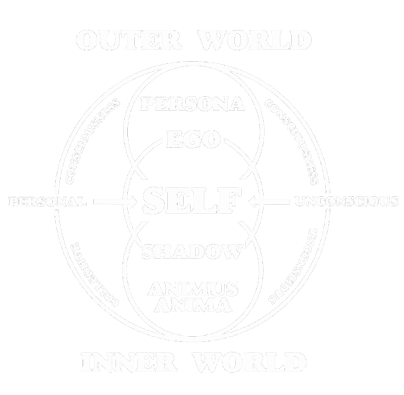
Persona means the social face through which we meet the world: professional role, public manner, reputation, and the behavior a situation requires. It is not simply false. A flexible Persona protects privacy and makes social life possible. Difficulty begins when the ego mistakes the role for the whole person, or when no workable social form has developed.
The Shadow
The Shadow gathers qualities the conscious personality does not recognize or wishes not to own. It may contain aggression, envy, fear, and selfishness, but also vitality, tenderness, authority, or creativity that the person was taught to suppress. Shadow material is often encountered through disproportionate reactions and projection. Integration means accepting responsibility for the capacity, not acting out every impulse.
Anima and Animus
Jung described the Anima as an inner feminine figure in a man and the Animus as an inner masculine figure in a woman. This gendered formulation reflects his historical period and should not be treated as a timeless rule about biology, gender, or sexuality. Contemporary Jungian readers often approach anima and animus more broadly as personifications of inner otherness: qualities, voices, and modes of relation that the ego has not yet integrated. Projection can make these figures appear through idealization, fascination, judgment, or conflict with another person.
The Self
The Self is the archetype of psychic totality and the ordering relation between conscious and unconscious life. It is larger than the ego, but it is not simply a perfected ego or an automatic synonym for a metaphysical “Higher Self.” Mandalas, divine children, paired opposites, circles, quaternities, and centered images may symbolize it, depending on context. The Self does not erase contradiction; it holds the personality in a wider pattern.
Other Recurring Figures
Jung and later analytical psychologists also explored figures such as the Great Mother, Wise Old Man or Woman, Divine Child, Hero, Trickster, and Kore. These names identify families of symbolic experience rather than characters with rigid checklists. A nurturing mother image, for example, can reveal protection and fertility in one setting, engulfment or dependency in another.
A Map of the Psyche
Ego and Consciousness
The ego is the center of conscious identity: the organizing sense of “I” that remembers, chooses, and responds to the world. It is necessary, but it represents only the conscious field, not the whole psyche.
The Personal Unconscious and Complexes
The personal unconscious contains forgotten, repressed, subliminal, or insufficiently recognized experience. Within it, complexes are emotionally charged clusters of memory, image, belief, and expectation. A complex is not automatically a disorder; it becomes visible when a situation evokes reactions that feel partly autonomous or larger than the present event.
The Collective Unconscious
Jung proposed the collective unconscious as a deeper, impersonal level of psychic structure that is not acquired from one individual's biography. Archetypes are its organizing patterns. It is not a shared database of ancestral memories, telepathic information, or another name for the Akashic Records. Similarities between myths can be explored psychologically without claiming that every culture secretly taught one identical doctrine.
Individuation
Individuation is the continuing process of becoming a more differentiated and integrated person. It involves recognizing the Persona without being confined by it, meeting the Shadow, withdrawing projections, and developing a conscious relation to the unconscious. It is not isolation, perfection, or spiritual superiority; greater wholeness should deepen responsibility toward both inner life and the surrounding world.
Using Archetypes Responsibly
Begin with the image and its context. Ask what emotion it carries, what role it plays, what it protects or threatens, and how it changes across the dream, myth, or life situation. Then compare patterns without erasing cultural differences.
Archetypes are most useful as questions: What is seeking expression? What has been excluded? Where am I projecting this pattern onto someone else? They are interpretive tools, not diagnoses, supernatural guarantees, or excuses for behavior. Psychological distress, trauma, and crisis require appropriate professional care rather than archetypal labeling alone.
Archetype Title
Detailed description of the archetype will be here...

 Home
Home Knowledge
  Tools
Tools  Practice
  Divination
  Profile
 Contact